
Gastroenterology
Peptic Ulcer Treatment in Karachi: Stomach Ulcer
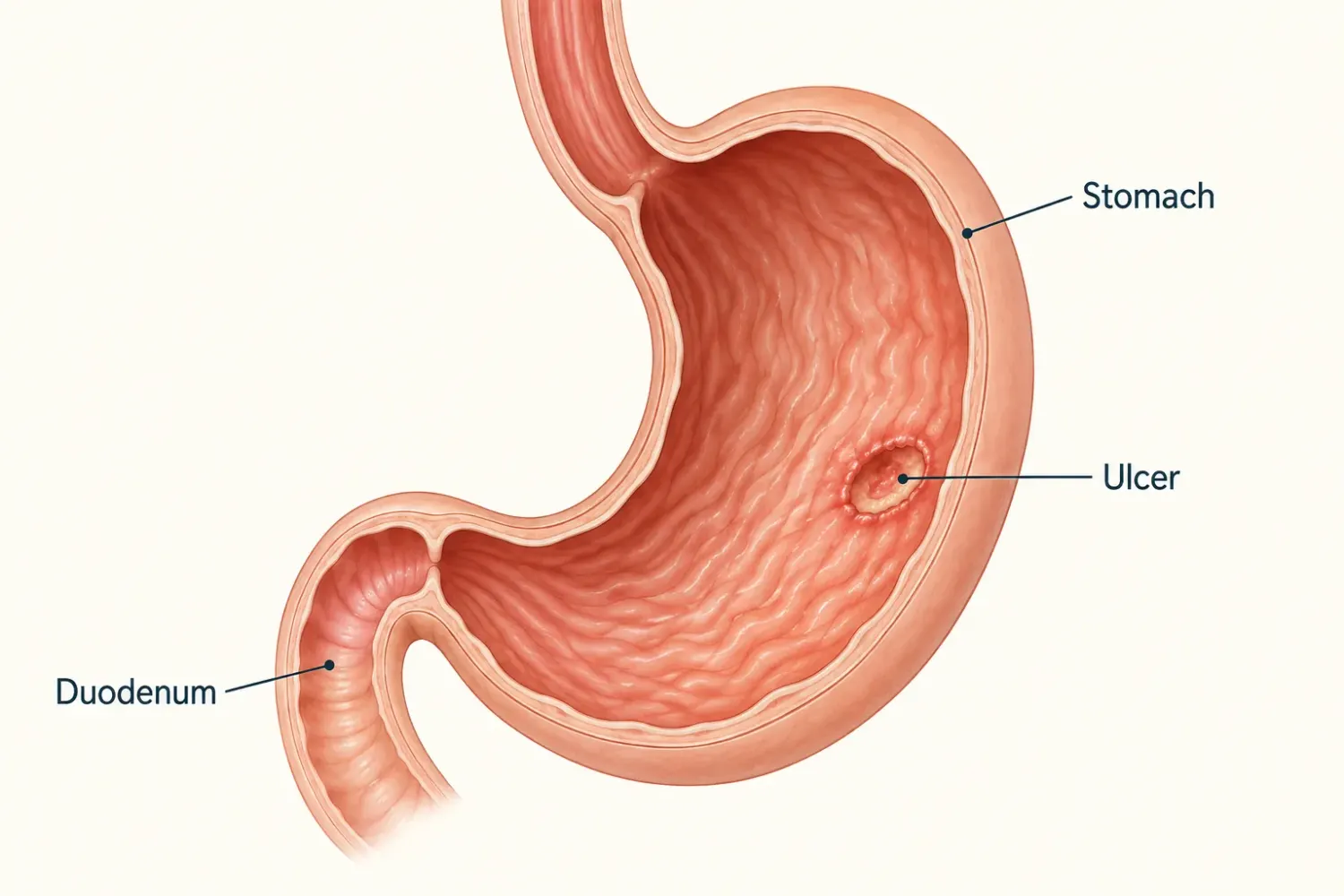
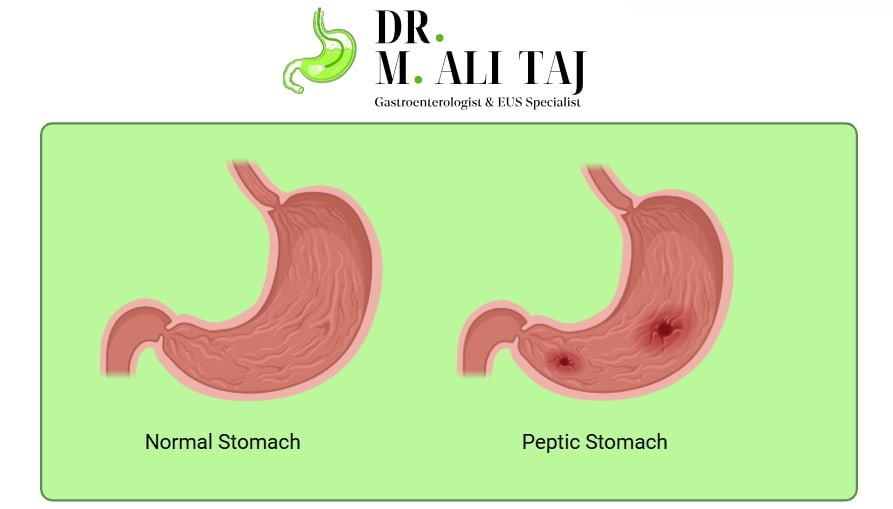
A peptic ulcer is an open sore in the lining of the stomach (a gastric ulcer) or the first part of the small intestine. In Urdu it is usually called maiday ka ulcer (معدے کا السر) or maide ka zakhm.
An ulcer in the stomach lining. The duodenum is the first part of the small intestine.
What causes peptic ulcers?
The American College of Gastroenterology names two main causes:
- H. pylori infection. This bacterium lives in the stomach lining and weakens its protection against acid. Not everyone who carries it gets an ulcer, but it is one of the two leading causes.
- NSAIDs. These are the painkillers commonly taken for headache, body pain and joint pain. Low-dose antiplatelet tablets prescribed for the heart belong to the same family. According to NIDDK, the risk is higher with long-term use, high doses, taking more than one NSAID, or taking them while also infected with H. pylori.
Symptoms of a stomach ulcer
The most common symptom is a burning or gnawing pain in the upper abdomen, between the belly button and the breastbone. Many patients describe it as pait ke ooper jalan. Others notice:
- Feeling full too early during a meal
- Bloating and belching
- Nausea or vomiting
These symptoms overlap with ordinary acidity (tezabiat) and indigestion, so the pattern alone cannot confirm an ulcer. Some ulcers cause no pain at all until they bleed.
How a peptic ulcer is diagnosed
The first part is your symptoms, any previous ulcer, and every medicine you take, including painkillers bought without a prescription.
Testing for H. pylori. The useful tests are a breath test, a stool antigen test, or biopsies taken during endoscopy (NIDDK). The 2024 ACG guideline recommends H. pylori testing for anyone with a current or past ulcer, and for people starting long-term NSAIDs or daily antiplatelet tablets.
Upper endoscopy. In an upper endoscopy (gastroscopy), a thin camera is passed through the mouth to look at the food pipe, stomach and duodenum. It confirms an ulcer, shows where it is, and allows biopsies. The ACG guideline advises endoscopy with biopsies when indigestion comes with warning features:
- Signs of bleeding
- Repeated vomiting
- Unexplained weight loss
- Iron deficiency
Not every stomach ache needs an endoscopy. Under 60 and without warning signs, testing and treating for H. pylori is often the first step.
How a peptic ulcer is treated
Treatment follows the cause. Your doctor chooses the specific medicines. Please consult a medical professional for diagnosis and treatment plan.
Healing the ulcer itself
Acid-reducing medicine (usually a proton pump inhibitor) lowers stomach acid so the sore can heal. Healing takes several weeks, and the exact time depends on the ulcer’s size, its cause and whether there were complications. If an ulcer does not heal or comes back, the next step is usually endoscopy with biopsies to find out why.
Food, smoking and day-to-day life
There is no special ulcer diet. NIDDK states that diet has not been shown to cause, prevent or treat peptic ulcers. Eat a normal balanced diet of daal, roti or rice, vegetables, fruit and protein, and cut back on whatever clearly makes your burning worse.
Foods marketed as “killing” H. pylori do not replace treatment. If you have read our H. pylori diet guide, treat the diet as support alongside medicine. Quitting smoking helps ulcers heal and lowers the chance of a new one.
When to see a gastroenterologist
Book a routine appointment if:
- Upper stomach pain or burning keeps returning, or wakes you at night
- Symptoms come back after a course of acid-reducing medicine
- You have had an ulcer before, or tested positive for H. pylori and were never retested
- You take NSAIDs or a heart tablet regularly and have stomach symptoms
- You are losing weight without trying, find swallowing difficult, or have been told you are anaemic
Go to emergency instead for vomiting blood, black stools, sudden severe pain or fainting.
Seeing Dr. Ali Taj in Karachi
Dr. Muhammad Ali Taj is a consultant gastroenterologist and hepatologist with 28+ years of practice. His clinical focus includes H. pylori, peptic ulcer and GERD, and he has performed more than 14,000 endoscopic procedures. He practises at:
- Ziauddin Hospital, Clifton
- Hill Park General Hospital
- Lyfe Healthcare
- Life Care Consultant Clinics
- Usman Memorial Hospital
Bring any earlier endoscopy reports, H. pylori test results and a list of every medicine you take, including painkillers bought from a pharmacy. That list often explains the ulcer.
For a Roman-Urdu version of this guide, read peptic ulcer ka ilaj. For H. pylori in more detail, see H. pylori ka ilaj.
Frequently asked questions
Can a peptic ulcer heal completely?
Most ulcers heal once the cause is treated such as H. pylori is cleared. Healing takes several weeks.
Do I need an endoscopy for a stomach ulcer?
Endoscopy is advised when there are warnings such as bleeding, repeated vomiting, unexplained weight loss or iron deficiency, when an ulcer does not heal.
How do I know H. pylori has gone after treatment?
A breath test, stool test or biopsy taken at least four weeks after the antibiotics end confirms it.
Can stress or spicy food cause an ulcer?
They are not the main causes. Most ulcers come from H. pylori or NSAID painkillers. Spicy food can make your discomfort worse, and smoking slows healing, but neither replaces treating the cause.
Should I stop my daily heart tablet if I have an ulcer?
Low-dose antiplatelet tablets prescribed for the heart can contribute to ulcers, but stopping them suddenly can be dangerous. Your gastroenterologist and cardiologist decide together whether to continue it with protective medicine.
Which doctor should I see for a peptic ulcer in Karachi?
Gastroenterologists diagnose ulcers, test and treat H. pylori, perform upper endoscopy when it is needed, and follow up until the cause is cleared.
This article is general information and does not replace an individual assessment or treatment plan from your doctor.
To see Dr. Ali Taj about a stomach ulcer or H. pylori, check the consultation schedule.