
Procedures
ERCP in Karachi — Bile Duct and Gallstone Treatment
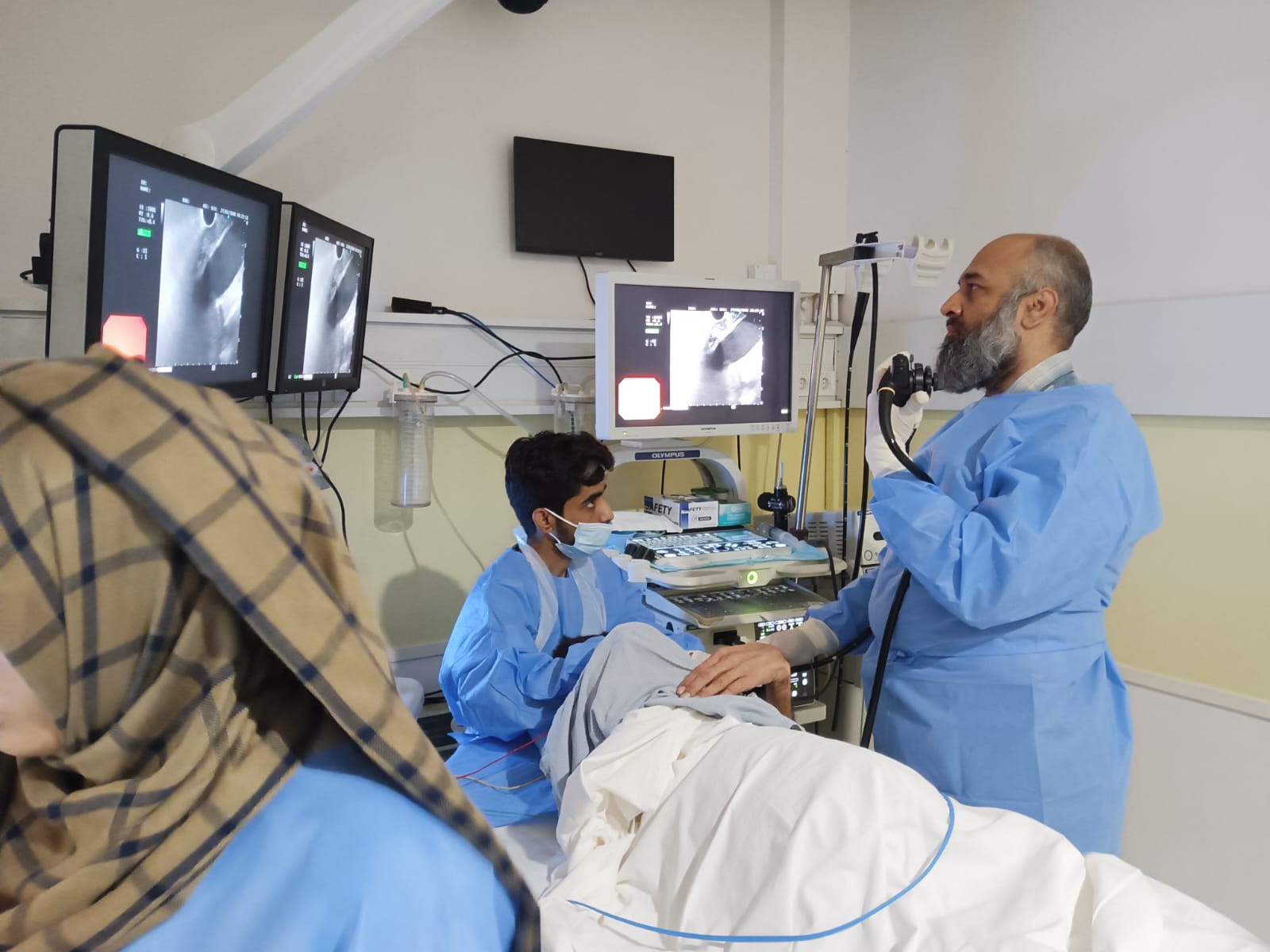
The typical patient referred for ERCP arrives yellow, in pain, and frightened. A stone has slipped out of the gallbladder and jammed in the bile duct, bile is backing up into the blood, and the whites of the eyes have turned yellow. Twenty years ago that meant open surgery. Now it means a day in the endoscopy suite.
ERCP, or endoscopic retrograde cholangiopancreatography, is how a blocked bile duct gets cleared without cutting the abdomen. It matters to understand one thing about it from the start: unlike most tests, ERCP is a treatment. It is not something you do to find out what is wrong. It is what you do once you already know.
What is an ERCP?
The name unpacks the procedure:
- Endoscopic: a side-viewing scope passes through the mouth, down the oesophagus and stomach, into the duodenum, where the bile and pancreatic ducts drain.
- Retrograde: a fine catheter is threaded up into those ducts, against the natural downward flow of bile.
- Cholangiopancreatography: contrast dye is injected and X-rays taken, mapping the biliary tree (“cholangio”) and pancreatic duct (“pancreato”).
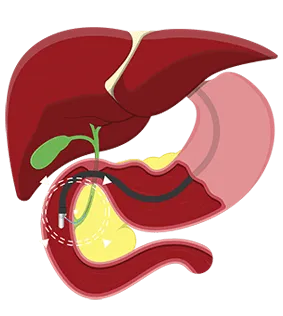
Figure 1: The scope positioned in the duodenum, with a catheter ascending into the biliary and pancreatic ducts. © Dr. Ali Taj
ERCP kab zaroori hoti hai? (When is ERCP needed?)
ERCP is indicated when something in the bile or pancreatic duct needs to be physically dealt with:
- Bile duct stones: the commonest reason by a wide margin. A stone that has migrated from the gallbladder into the common bile duct, causing jaundice, pain, or infection.
- Cholangitis: infection of an obstructed bile duct. This is an emergency, and draining the duct is the treatment.
- Obstructive jaundice from a tumour: placing a stent to relieve the blockage, whether or not surgery is planned.
- Strictures: narrowings of the duct, benign or malignant, that need stretching or stenting.
- Bile leaks: after gallbladder surgery, sealed with a stent.
- Selected pancreatic duct problems: stones or strictures in chronic pancreatitis.
Note what is not on that list: routine investigation of abdominal pain, or simply confirming that a stone exists. That is what MRCP and EUS are for, and both are far safer. Doing a diagnostic-only ERCP is now considered poor practice, because you accept a real risk of pancreatitis for information you could have obtained without it.
What actually gets done during the procedure
Once the catheter is in the duct, the therapeutic options open up. In a single sitting Dr. Taj may:
- Perform a sphincterotomy: a small cut in the muscle at the duct opening, widening it so stones can pass
- Extract stones with a balloon or a wire basket
- Crush large stones (mechanical lithotripsy) when they are too big to pull out whole
- Dilate a stricture with a balloon
- Place a stent: plastic or metal — to hold a narrowed or blocked duct open
- Take brushings or biopsies from a suspicious stricture
- Seal a bile leak
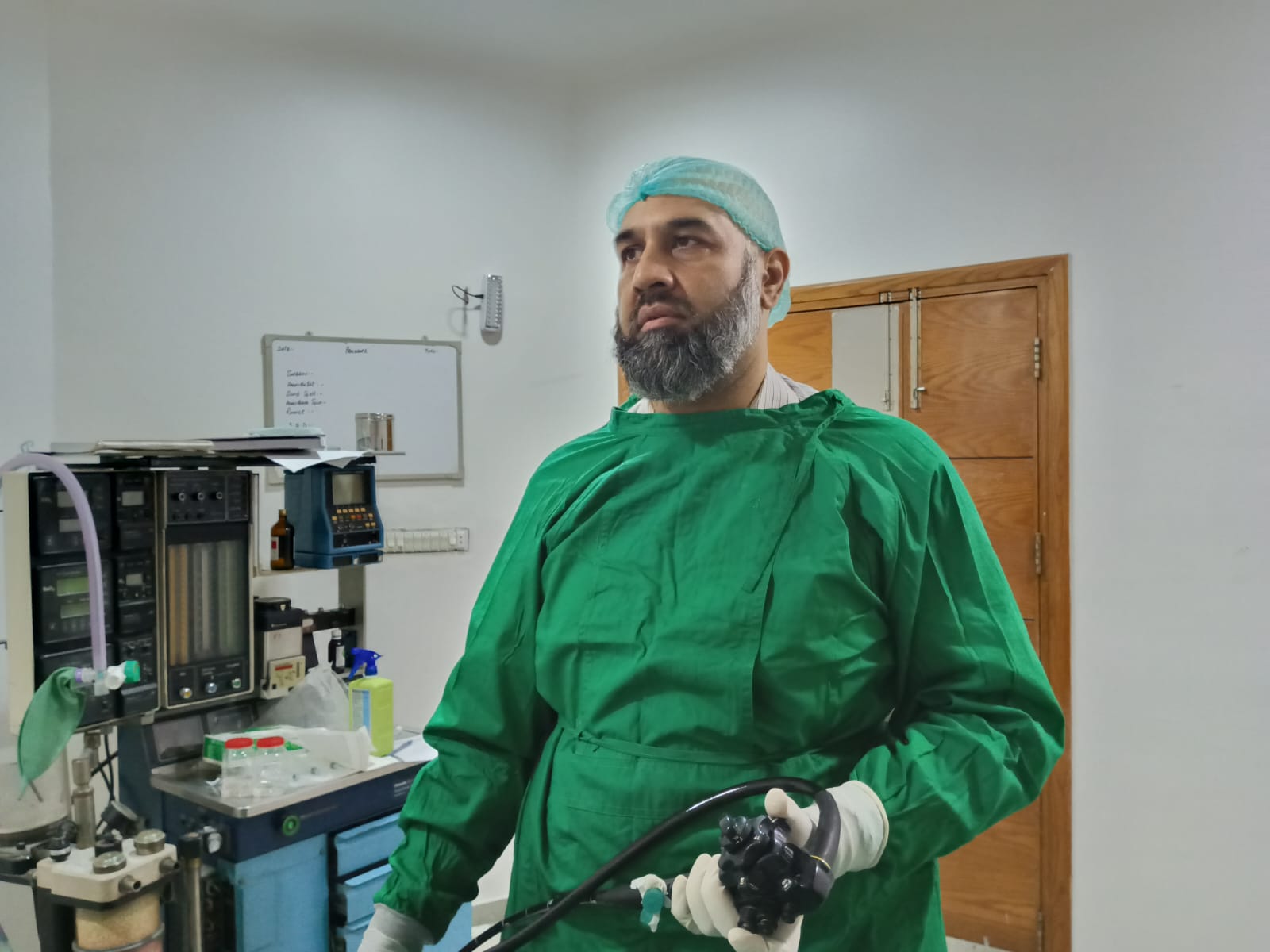
Figure 2: Dr. Ali Taj preparing for an interventional endoscopic procedure. © Dr. Ali Taj
Where the duct anatomy is unclear or a stricture needs to be seen directly, SpyGlass cholangioscopy allows a miniature camera to be passed into the bile duct itself, rather than relying on the X-ray shadow alone.
Procedure se pehle taiyaari (Preparation)
- Fast for at least 8 hours. No food, no chewing gum, no smoking. Small sips of plain water only, and stop those too if told.
- Blood thinners must be discussed well in advance. A sphincterotomy involves cutting muscle, so anticoagulation matters here more than in a routine endoscopy. Never stop them on your own initiative.
- Contrast allergy. ERCP uses iodine-based dye. If you have reacted to contrast before, say so before you are in the room.
- Bring a companion, and expect to stay overnight. Unlike gastroscopy, ERCP is not reliably a go-home-in-two-hours procedure.
Risks — the honest version
This is the section that matters most, and it is the one most often glossed over. ERCP is the highest-risk procedure in routine gastroenterology, and the risk is worth accepting only when there is something to treat.
| Complication | Roughly how often | What it looks like |
|---|---|---|
| Pancreatitis | 3–10% | Severe abdominal pain hours afterwards, boring through to the back |
| Bleeding | 1–2% | Usually after sphincterotomy; may show as black stools |
| Cholangitis / infection | 1–3% | Fever, chills, worsening jaundice |
| Perforation | Under 1% | Severe pain, unwell, needs urgent imaging |
The American Society for Gastrointestinal Endoscopy is direct about how to reduce this:
The most effective strategy for avoiding ERCP-related adverse events is to avoid unnecessary procedures. ERCP should be reserved for patients in whom therapy is anticipated.
That is exactly why Dr. Taj will often order an EUS or MRCP first. If the duct is clear, you have avoided the risk entirely.
After an ERCP, seek help urgently if you develop:
- Severe abdominal pain, particularly pain going through to the back, that gets worse rather than better
- Fever or shaking chills
- Vomiting blood, or black tarry stools
- Deepening jaundice, or pale stools with dark urine
Post-ERCP pancreatitis is manageable when caught early and dangerous when ignored. Do not wait until the morning to see whether it settles.
Recovery aur aftercare
You will be monitored for several hours, and usually overnight, with blood tests to check the pancreas if there is any concern. Expect a sore throat, tiredness, and mild abdominal discomfort. Most patients eat normally the next day and return to routine activity within two or three days.
If a plastic stent was placed, it is temporary. It will need removing or exchanging, typically within a few months, and that appointment is not optional — a stent left in indefinitely blocks and causes infection.
One point patients frequently miss: clearing a stone from the bile duct does not deal with the gallbladder it came from. If gallstones remain in the gallbladder, another one can migrate. Most patients are referred to a surgeon for gallbladder removal afterwards. Dr. Taj is a gastroenterologist, not a surgeon, so that part is done by a surgical colleague.
Karachi mein ERCP — Dr. Taj ke saath
ERCP outcomes track operator volume more closely than almost any other endoscopic procedure. Cannulating the duct is a technical skill, and the complication rate falls as the number of attempts falls.
Dr. Muhammad Ali Taj is a consultant gastroenterologist, hepatologist and interventional endoscopist in Karachi with 28+ years in practice and more than 14,000 endoscopic procedures, including ERCP and EUS. His qualifications are MBBS, MCPS, FCPS (Gastroenterology), MRCP Gastroenterology (UK), SCE (UK) and ESEGH (Europe). He is a member of the Royal Colleges of Physicians of London and Glasgow and of the Pakistan Society of Gastroenterology, with 14 peer-reviewed publications on Google Scholar and ORCID.
He practises at:
- Ziauddin Hospital, Clifton
- Hill Park General Hospital
- Life Care Consultant Clinics
- Usman Memorial Hospital
Background on the about page; a summary of the procedure sits on the ERCP procedure page.
Aksar puchhe jaane wale sawaalat (FAQs)
Is ERCP a major operation? No. There are no cuts in the abdomen. The scope passes through the mouth, so recovery is measured in days rather than weeks. It is still an advanced procedure with real risks, and it is done under sedation or general anaesthesia with full monitoring, usually with an overnight stay.
Can ERCP remove gallstones? It removes stones that have moved out of the gallbladder and lodged in the bile duct, which is the situation causing jaundice, pain and infection. It cannot remove stones sitting inside the gallbladder itself. Most patients who need ERCP for a duct stone are advised to have the gallbladder removed by a surgeon afterwards, or the problem recurs.
What is the main risk of ERCP? Pancreatitis, reported in roughly 3 to 10 percent of procedures depending on patient risk factors. It usually presents as severe abdominal pain in the hours afterwards. Other risks are bleeding after a sphincterotomy, infection of the bile duct, and perforation, all uncommon. This risk profile is why ERCP is reserved for cases needing treatment.
How is ERCP different from EUS? EUS looks and samples; ERCP treats. EUS is the better and safer test for finding out whether a stone or tumour is there. ERCP is what you do once you know something needs clearing, stretching or stenting. Increasingly the two are combined so a patient has one sedation instead of two.
How long does recovery from ERCP take? Most patients are observed for several hours or overnight and go home the next day. You will feel tired and may have a sore throat and mild abdominal discomfort. Normal eating usually resumes the following day. Pain that worsens rather than settles needs urgent assessment.
Will I be awake during ERCP? No. ERCP is done under deep sedation or general anaesthesia, with anaesthetic monitoring throughout. You will not be aware of the procedure and will not remember it.
This article is for general information and is not a substitute for consultation. Whether ERCP is the right procedure for you depends on your imaging, blood results and history.