
Diagnostics
Ultrasound Side Effects: Are Ultrasound Scans Safe?
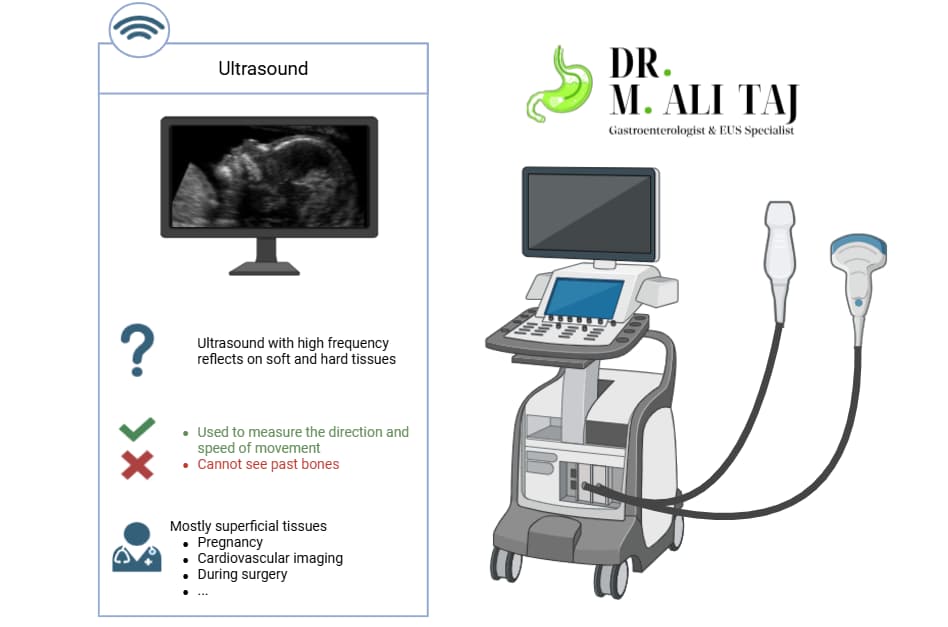
Ultrasound is an imaging test that uses high-frequency sound waves, not radiation, to make pictures of the organs inside the body. In Urdu it is called ultrasound or scan. A standard diagnostic ultrasound has no known harmful side effects, and that is exactly why it can be repeated safely, even in pregnancy. The confusion usually comes from lumping ultrasound in with X-rays and CT scans. Those use ionising radiation. Ultrasound does not.
Does an ultrasound have side effects?
A standard diagnostic ultrasound has no proven harmful side effects in adults. It works by bouncing sound waves off internal organs and reading the echoes, so nothing is injected and no radiation is involved. Most people notice only the cool gel and a little pressure from the probe. You can eat, drive, and return to work immediately.
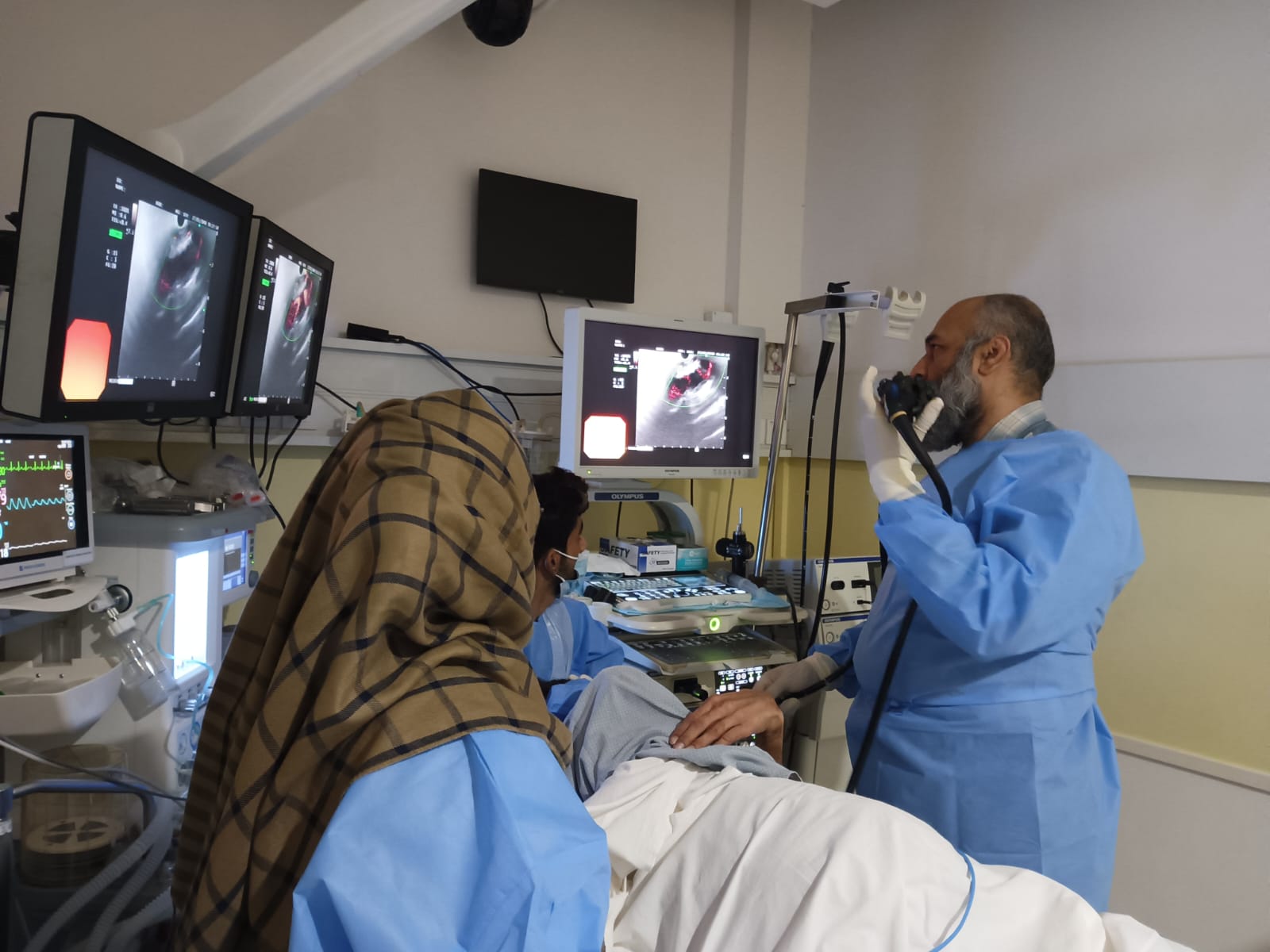
Endoscopic ultrasound (EUS) combines endoscopy with ultrasound, allowing detailed imaging of the digestive tract and surrounding organs. © Medical imaging
Ultrasound imaging has been used for over 20 years and has an excellent safety record. It is based on non-ionizing radiation, so it does not have the same risks as X-rays or other types of imaging systems that use ionizing radiation.
Skin ultrasound vs endoscopic ultrasound (EUS)
The word ultrasound covers two very different tests, and their side effects are not the same. A skin (external) ultrasound is done with a probe on the belly and carries essentially no risk. Endoscopic ultrasound puts a tiny ultrasound probe on the tip of a scope that passes through the mouth, so it adds the small risks of an endoscopy.
| Abdominal (skin) ultrasound | Endoscopic ultrasound (EUS) | |
|---|---|---|
| How it is done | Probe and gel on the skin | Thin scope through the mouth |
| Radiation | None | None |
| Sedation | Not needed | Usually light sedation |
| Common after-effects | Cool gel, mild pressure | Mild sore throat, bloating |
| Rare risks | None of note | Bleeding or a small tear (uncommon) |
| Recovery time | None | A few hours after sedation |
If you want the full picture of how EUS is done and why, see endoscopic ultrasound (EUS) in Karachi.
What are the side effects of endoscopic ultrasound?
For EUS, most after-effects are mild and short lived: a scratchy throat, some bloating from the air used during the procedure, and drowsiness from the sedation. These usually settle within a day. Serious complications, such as bleeding or a small tear in the gut wall, are uncommon and are the reason the procedure is done by a trained endoscopist in a proper unit.
Because sedation is involved, you should not drive or make important decisions for the rest of the day. Arrange for someone to take you home. The preparation and aftercare overlap closely with an upper endoscopy, which the endoscopy procedure guide explains step by step. A similar logic applies to lower-gut imaging in a colonoscopy.
Kab doctor se rabta karein?
After a skin ultrasound there is nothing to watch for. After an endoscopic ultrasound with sedation, most people are back to normal by the next day, but a few warning signs deserve a prompt call to your doctor or a return to hospital.
Seek emergency care now if, after an EUS or endoscopy, you have: severe or worsening abdominal or chest pain, vomiting of blood, black tarry stools, a high fever, or difficulty breathing. These are rare but need same-day assessment.
Aksar puchhe jaane wale sawaalat (FAQs)
Does an ultrasound have side effects? A standard diagnostic ultrasound has no known harmful side effects. It uses high-frequency sound waves, not ionising radiation like X-rays or CT scans. Most people feel only the cool gel and mild pressure from the probe. There is no recovery time and you can go straight back to normal activity.
Kya ultrasound nuksan deta hai? Aam tashkhisi (diagnostic) ultrasound se koi sabit shuda nuksan nahi hota. Ye sound waves istemal karta hai, X-ray ya CT ki tarah radiation nahi. Zyada tar logon ko sirf thanda gel aur halka dabao mehsoos hota hai. Iske baad koi aaram ki zaroorat nahi hoti.
Is abdominal ultrasound safe for adults? Yes. Abdominal ultrasound is one of the safest imaging tests for adults. It is used to look at the liver, gallbladder, kidneys, and other organs without any radiation. That is why it can be repeated as often as needed, including in pregnancy.
What are the side effects of endoscopic ultrasound (EUS)? Endoscopic ultrasound is different from a skin ultrasound because a thin scope goes through the mouth. Most people have only a mild sore throat and bloating afterwards. Serious problems such as bleeding or a tear are rare. The sedation used, not the ultrasound itself, accounts for most of the minor after-effects.
Does ultrasound cause cancer or radiation? No. Ultrasound does not use ionising radiation, so it does not carry the cancer risk linked to repeated X-rays or CT scans. Decades of use have not shown a harmful radiation effect from diagnostic ultrasound at standard settings.
Is ultrasound gel harmful to the skin? The water-based gel used for ultrasound is not harmful. It simply helps the sound waves pass into the body. Skin reactions are rare, and the gel wipes off easily after the scan.
This article is for general information only. It is not a substitute for personalised medical advice, diagnosis, or treatment. If you have symptoms that worry you, or any of the emergency signs above after a procedure, see a doctor or visit an emergency department promptly.
Karachi mein appointment
For endoscopic ultrasound and non-emergency digestive assessment, Dr. Muhammad Ali Taj consults at Ziauddin Hospital, Clifton, Hill Park General Hospital, Life Care Consultant Clinics, and Usman Memorial Hospital. To book an appointment, visit the consultation schedule page.