
Gastroenterology
Appendix Ki Alamat: Appendicitis Symptoms
Last clinically reviewed: 23 July 2026
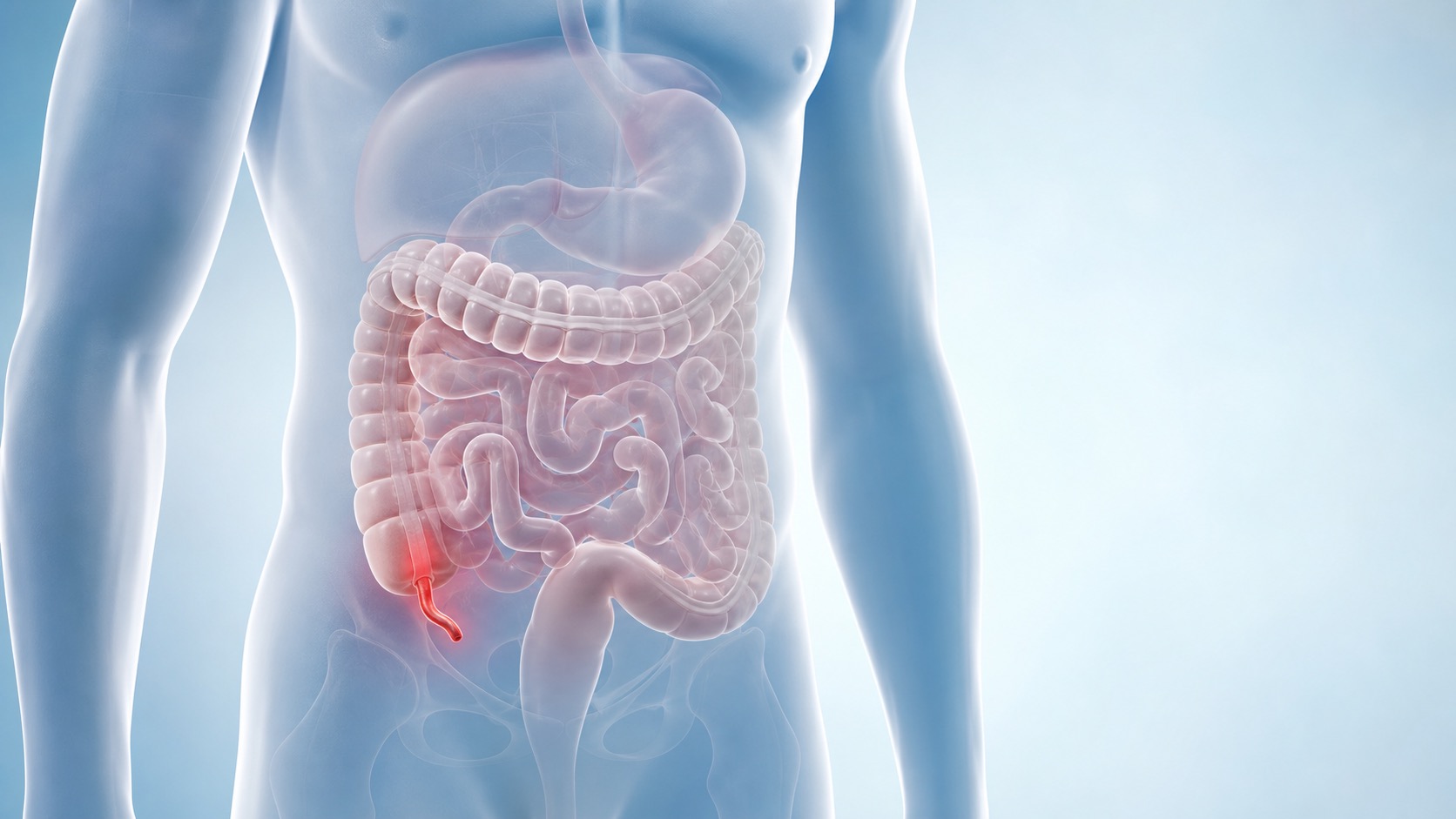
Appendix ki sozish (اپنڈکس کی سوزش), known in English as acute appendicitis, can turn into a surgical emergency within a day or two. The appendix is a small finger shaped pouch attached to the start of the large intestine, sitting low on the right side of the abdomen.
Appendix ka dard aur aam gas ka dard bilkul alag cheezein hain. The trouble is that in the first few hours they can feel similar, and many patients in Karachi treat it at home with painkillers or a laxative first. That delay is exactly what turns a simple appendicitis into a perforated one.
Appendix kya hai?
Appendix is a small, 3 to 4 inches long, thin pouch of tissue attached to the lower end of the large intestine. Initially, scientists thought that it is a vestigial organ, meaning it has no use. However, recent studies show that it is an important organ, especially in the early years when the immune system is developing.
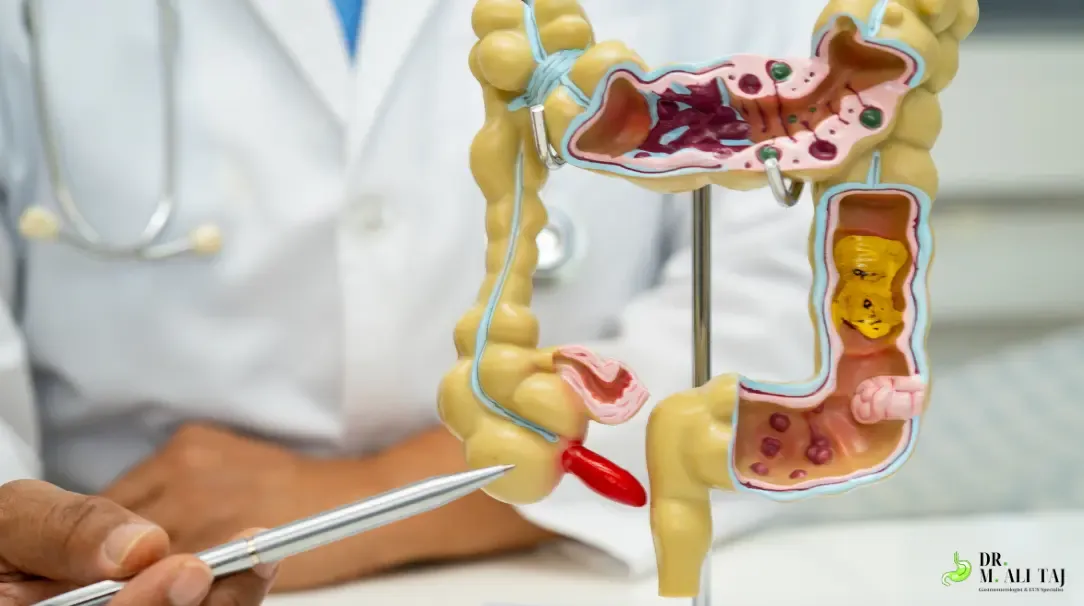
The appendix sits at the lower right of the abdomen, where the small and large intestine meet. © Dr. M. Ali Taj
Appendix kya karta hai?
Appendix functionality includes:
-
Microbiome balance: Your appendix helps in maintaining the balance between the good and bad bacteria in your gut. By supporting the helpful microbes, it prevents bad bacteria from taking over.
-
Immune system: Your appendix has a lot of immune cells especially B and T cells. These cells help body fight germs and make antibodies. This helps your immune system learn which bacteria and viruses are safe and which can make you sick.
-
Good bacteria storage: Your appendix is also a safe house for the good bacteria. These bacteria return to your intestines after an illness and help with digestion.
Appendix ka structure kaisa hota hai?
Your appendix has a complex structure. Its layers include:
- Mucosa : The innermost layer that lines the appendix
- Submucosa : A layer with lots of lymphoid tissue (immune system cells)
- Muscularis propria : A layer of muscle that helps move contents
- Serosa : The outer protective layer
Appendix kesay kharab hota hai ?
Healthy appendix ek normal, patli naali hoti hai jo bina kisi masle ke kaam karti hai. Jab iska raasta band ho jaye aur andar bacteria barh jayein, to yeh soojh jata hai (swollen ya inflamed), isko appendicitis kehte hain, aur yehi dard, matli aur bukhar ki wajah banta hai. Agar ilaj mein der ho, to soojha hua appendix phat (ruptured ya perforated) sakta hai, jis se infection poore pait mein phail jata hai aur peritonitis ho jata hai. Yeh sab se khatarnak marhala hai aur foran operation maangta hai.
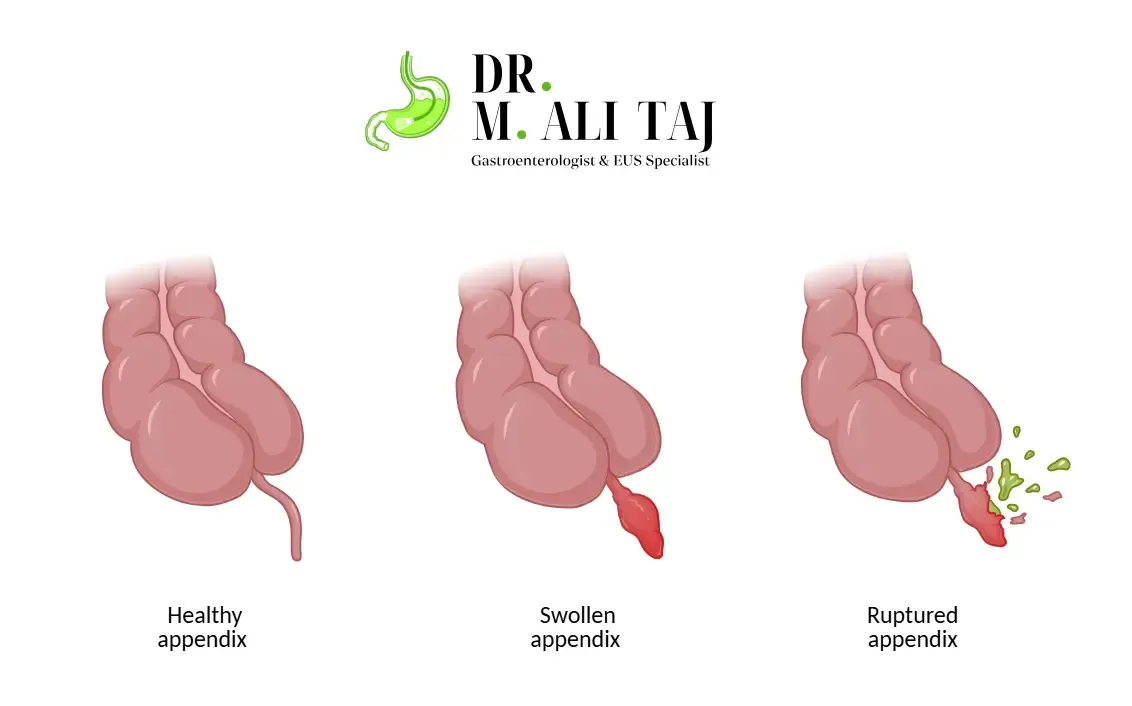
The three stages of appendix damage: healthy, swollen (inflamed), and ruptured. © Dr. M. Ali Taj
Appendix ka dard kahan aur kaisa hota hai?
Appendix ka dard aksar naaf ke aas paas ek dull, halke dard se shuru hota hai. Chand ghanton mein yeh neeche daayein taraf (lower right) shift ho jata hai aur tez ho jata hai. Doctor ise McBurney’s point kehte hain. Chalne, khaansne, ya gaari ke jhatke par dard barh jata hai. Pait dard ki wajuhat ke liye pait dard ka ilaj check karein for more information.
Appendix ki alamat kya hain?
Appendicitis ki classic alamat char hain: neeche daayein pait ka dard, bhookh ka khatam ho jana (anorexia), matli ya ek do baar ulti, aur halka bukhar. Yeh alamat aksar isi tarteeb mein aati hain. Bachon aur buzurgon mein tasveer dhundli ho sakti hai, isliye shak zyada rakhna parta hai.
Appendicitis zindagi mein aam hai. WSES Guidelines ke mutabiq lifetime risk mardon mein takreeban 8.6% aur auraton mein 6.7% hai, aur yeh aksar 10 se 30 saal ki umar mein hota hai.
Gas ke dard aur appendix ke dard mein farq kaise karein?
Sab se aam sawal yehi hota hai. Gas ka dard belly mai kahin bhi hodakta hai, hawa ya pakhana khaarij honay par kam ho jata hai, aur bukhar ya bhookh khatam honay ke baghair hota hai. Appendix ka dard ek jagah jam jata hai, waqt ke saath barhta hai, aur khaansne par tez hota hai.
| Farq | Gas / badhazmi ka dard | Appendix ka dard |
|---|---|---|
| Jagah | Poore pait mein phirta hai | Neeche daayein taraf jam jata hai |
| Waqt ke saath | Aata jata rehta hai | Musalsal barhta hai |
| Bukhar | Nahi | Halka bukhar aksar |
| Bhookh | Normal | Khatam ho jati hai |
| Hawa/pakhana khaarij honay par | Kam ho jata hai | Farq nahi parta |
Agar dard aa ja raha hai aur pakhane ke saath badalta hai, to yeh aksar gas ya IBS hota hai. Iski tafseel pait mein maror aur pait ki gas ka fori ilaj pages par hai. Lekin agar wahi dard neeche daayein jam jaye aur bukhar ke saath ho, to appendicitis kabhi hosakta hai, contact medical professional.
Kab foran doctor ya emergency jana hai?
Foran emergency jayein agar dard neeche daayein taraf jam gaya ho aur barh raha ho, bukhar ho, poora pait sakht aur choone par dard ho, ulti ruk na rahi ho, ya achanak dard bohat tez ho jaye. Yeh appendix phatne (perforation) aur peritonitis ki nishaniyan ho sakti hain, jo jaanleva hai.
Der khatarnak kyun hai? Ek soojha hua appendix takreeban 48 se 72 ghanton mein phat sakta hai. Aga Khan University, Karachi ke ek study mein takreeban 20% mareezon mein complicated appendicitis mili, aur der se aana aur appendicolith (appendix mein sakht pathri) iski badi wajuhat thin.
Seek emergency care now if you have: severe or worsening abdominal pain, a hard or swollen abdomen, repeated vomiting, fever with right-sided pain, fainting, confusion, or blood in vomit or stool.
Appendix ke dard mein kya karein aur kya na karein?
Agar appendicitis ka shak ho to sab se aham usool yeh hai: kuch na khayein na piyein aur seedha emergency jayein. Khaali pet isliye zaroori hai kyunke agar operation ki zaroorat pari to bharay pet se anaesthesia ka khatra barh jata hai. Neeche di gayi list follow karein.
- Foran emergency ya doctor se rabta karein.
- Pet ko aaram dein, khana peena band rakhein jab tak doctor na dekh le.
- Alamat, dard ki jagah, aur waqt note kar lein.
Not recommended :
- Painkiller (khaas tor par non-steroidal tablets) na lein. Woh dard chupa kar diagnosis ko mushkil bana dete hain.
- Laxative ya enema na lein. Yeh soojhe appendix ko phaar sakta hai.
- Pet par garam bottle ya totke na lagayein.
- Ghar par intezar na karein ke “shayad gas hai, theek ho jayega”.
Appendicitis ki tashkhees kaise hoti hai?
Tashkhees aksar clinical hoti hai: doctor pet ka muaina karta hai, daayein neeche tenderness aur rebound sign dekhta hai. Iske saath khoon ka test (barhe hue white cells) aur ultrasound ya CT scan diagnosis ko pukhta karte hain.
Appendix ka ilaj kya hai?
Standard ilaj appendix nikaalna hai, jise appendectomy kehte hain, aur laparoscopy bhi. Mild aur uncomplicated cases mein sirf antibiotics se bhi kaam chal sakta hai, lekin yeh faisla surgeon muaine aur imaging ke baad karta hai, ghar par nahi. Perforation ke kisi bhi ishare par operation zaroori ho jata hai.
Operation kaise hota hai, laparoscopic aur open mein kya farq hai, bina operation ke ilaj kab mumkin hai, recovery, parhez, aur kharche par kya asar parta hai, iski poori tafseel hamare appendix ka operation aur ilaj page par hai.
Kya appendix ke baghair reh saktay hain ?
Aap ke appendix ka bohat important kirdaar hai immunity or microbiomes mai. Agar appendix nikalwana paray, tou aap ke intestine (gut) mai good bacteria ki tadaad kam hosakti hai. Lambe arse mein kuch infections ya immune-related masail ka khatra thora barh sakta hai. Phir bhi bohat se patients appendix remove karane ke baad healthy rehtay hain. ye iss wajah se hota hai kyunke aap ki body adjust karjati hai. Aap ka baaki gut or immune system, appendix ki jagah kaam karnay lagtay hain.
Foran emergency jayein agar: neeche daayein pait ka dard bukhar ke saath ho, poora pait sakht aur dard-naak ho, ulti ruk na rahi ho, ya dard achanak bohat tez ho jaye. Yeh appendix phatne ki nishani ho sakti hai aur same-day surgical assessment maangta hai.
Aksar poochay janay walay sawal
Appendix ka dard kahan hota hai? Appendix ka dard aam tor par naaf (belly button) ke aas paas ek halke dard se shuru hota hai, phir chand ghanton mein neeche daayein taraf (lower right) shift ho jata hai. Chalne, khaansne, ya seedha honay par dard barh jata hai. Yeh migration appendicitis ki sab se pehchani jane wali nishani hai.
What are the early symptoms of appendicitis? The earliest sign is usually vague pain around the navel plus loss of appetite. Within hours the pain moves to the lower right abdomen and becomes sharper. Nausea, one or two episodes of vomiting, and a low-grade fever often follow. Pain that worsens with walking or coughing is a strong clue.
Appendix ka dard aur gas ka dard mein farq kaise karein? Gas ka dard belly mai kahin bhi hosakta hai, hawa ya pakhana khaarij honay par kam ho jata hai, aur bukhar ke baghair hota hai. Appendix ka dard ek jagah, neeche daayein taraf jam jata hai, waqt ke saath barhta hai, aur bhookh khatam ho jati hai. Agar dard ek hi jagah tez ho raha hai, doctor dikhayein.
Is appendicitis a medical emergency? Yes. Acute appendicitis is a surgical emergency. An inflamed appendix can perforate within 48 to 72 hours, spilling infection into the abdomen (peritonitis), which is life-threatening. If the pain has localised to the lower right side with fever or a rigid belly, go to an emergency department the same day. Do not wait.
Appendix phatne se kya hota hai? Jab appendix phat (perforate) jata hai to infection pet ki lining mein phail jata hai, jise peritonitis kehte hain. Yeh jaan-leva ho sakta hai aur foran operation ki zaroorat parti hai.
Can appendicitis be treated without surgery? In selected patients with mild, uncomplicated appendicitis, antibiotics alone can work. But surgery to remove the appendix (laparoscopic appendectomy) remains the standard treatment, especially if there is any sign of perforation. Only a surgeon can decide after examination and imaging. This is not a home decision.
Dr. Ali Taj consults at Ziauddin Hospital (Clifton), Hill Park General Hospital, and Usman Memorial Hospital. To book an appointment, visit the consultation schedule page or contact the clinic. For related belly-pain patterns, see pait dard ka ilaj, pait mein maror, and pait ki gas ka fori ilaj.