
Low FODMAP Diet for IBS - Complete Beginner's Guide | Dr. Ali Taj Karachi
If you are struggling with chronic digestive issues such as bloating, abdominal pain, gas, or irregular bowel movements, you may benefit from the low FODMAP diet. Dr. Muhammad Ali Taj, a leading gastroenterologist in Karachi with over 27 years of experience and more than 13,500 successful procedures, has helped thousands of patients across Pakistan find relief from irritable bowel syndrome (IBS) and other digestive disorders through dietary management.
Research shows that approximately 75% of IBS patients experience significant symptom improvement when following a properly structured low FODMAP diet. This scientifically backed approach has become a first-line therapy for IBS management in many parts of the world.
What is FODMAP?
FODMAP stands for Fermentable Oligosaccharides, Disaccharides, Monosaccharides, and Polyols. These are types of short-chain carbohydrates that are poorly absorbed in the small intestine. When FODMAPs reach the large intestine, they are fermented by gut bacteria, producing gas and drawing water into the bowel. This process can cause uncomfortable symptoms in people with sensitive digestive systems.
The Five FODMAP Categories
- Fructose: A simple sugar found in many fruits, honey, and high-fructose corn syrup
- Lactose: The sugar found in dairy products like milk, yogurt, and soft cheeses
- Fructans: Found in wheat, onions, garlic, and some vegetables
- Galacto-oligosaccharides (GOS): Found in legumes, beans, and lentils
- Polyols: Sugar alcohols found in certain fruits and artificial sweeteners (sorbitol, mannitol, xylitol)
Who Should Follow the Low FODMAP Diet?
The low FODMAP diet is primarily recommended for individuals diagnosed with:
- Irritable Bowel Syndrome (IBS) with symptoms of bloating, abdominal pain, diarrhea, or constipation
- Small Intestinal Bacterial Overgrowth (SIBO)
- Functional gastrointestinal disorders
- Endometriosis with accompanying gut symptoms (recent research shows 60% of patients respond positively)
Important: This diet should only be undertaken after proper medical diagnosis. Dr. Ali Taj emphasizes that conditions with similar symptoms, such as celiac disease, inflammatory bowel disease (IBD), and bowel cancer, must be ruled out before starting the low FODMAP diet.
The Three Phases of the Low FODMAP Diet
Phase 1: Elimination (2-6 Weeks)
During this phase, all high FODMAP foods are strictly eliminated from your diet. This allows your digestive system to rest and helps identify whether FODMAPs are contributing to your symptoms. Most patients begin to notice improvement within 2 weeks, with optimal results typically seen after 4-6 weeks.
Phase 2: Reintroduction (6-8 Weeks)
Once symptoms have improved, individual FODMAP groups are systematically reintroduced one at a time. This helps identify your specific trigger foods and tolerance levels. Each food is tested over 3 days with increasing portions, followed by a washout period before testing the next food.
Phase 3: Personalization (Long-term)
Based on your reintroduction results, a personalized diet is created that restricts only your specific trigger foods while allowing you to enjoy the widest variety of foods possible. This phase is sustainable for long-term management.
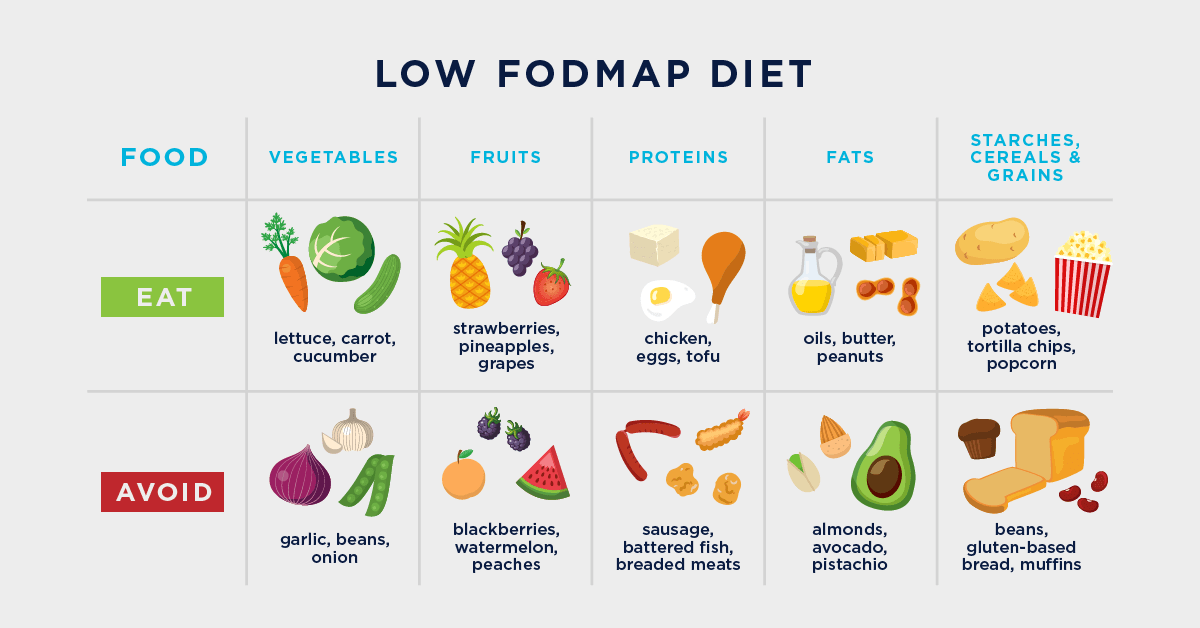
High FODMAP Foods to Avoid
During the elimination phase, avoid or limit these high FODMAP foods:
| Category | Foods to Avoid |
|---|---|
| Vegetables | Onions, garlic, asparagus, cauliflower, mushrooms, artichokes, leeks, sugar snap peas |
| Fruits | Apples, pears, mangoes, watermelon, cherries, peaches, dried fruits, fruit juices |
| Dairy | Regular milk, soft cheeses, ice cream, yogurt (with lactose), custard, cream |
| Grains | Wheat-based bread, pasta, cereals, rye, barley, couscous |
| Legumes | Chickpeas, kidney beans, lentils, baked beans, soybeans |
| Sweeteners | Honey, high-fructose corn syrup, agave, sorbitol, mannitol, xylitol |
| Nuts | Cashews, pistachios (in large amounts) |
Low FODMAP Foods You Can Enjoy
These foods are generally safe during the elimination phase:
| Category | Safe Foods |
|---|---|
| Vegetables | Carrots, zucchini, bell peppers, tomatoes, spinach, lettuce, cucumber, potatoes, eggplant, green beans |
| Fruits | Bananas (firm), oranges, grapes, strawberries, blueberries, kiwi, cantaloupe, pineapple |
| Dairy Alternatives | Lactose-free milk, hard cheeses (cheddar, parmesan), almond milk, rice milk, oat milk |
| Grains | Rice, quinoa, oats, gluten-free bread, rice noodles, corn-based products |
| Proteins | Chicken, fish, eggs, beef, lamb, tofu (firm), plain meats without marinades |
| Nuts & Seeds | Peanuts, walnuts, macadamias, sunflower seeds, pumpkin seeds |
How to Treat IBS in Children
IBS can affect children as well as adults, though it often presents differently. Dr. Ali Taj emphasizes that treating pediatric IBS requires a careful, multidisciplinary approach that considers the child’s nutritional needs and developmental stage.
Treatment Approaches for Pediatric IBS
- Positive Diagnosis: Reassure the child that their symptoms are real and manageable
- Dietary Modifications: Eliminate trigger foods such as sorbitol, fructose, and gas-producing legumes under dietitian guidance
- Low FODMAP Diet: Can be effective but must be supervised by a registered dietitian to ensure nutritional adequacy
- Stress Management: The gut-brain connection is strong; stress often triggers or worsens symptoms
- Behavioral Therapy: Gut-directed hypnotherapy and cognitive behavioral therapy have shown long-lasting benefits
- Probiotics: May help improve gut health in some children
Important for Parents: Work with your child’s school to create a supportive environment, including bathroom access and dietary accommodations. Keep a food and symptom diary to identify triggers specific to your child.
Is Low FODMAP Good for Endometriosis?
Emerging research from Monash University has demonstrated that the low FODMAP diet can significantly benefit women with endometriosis who experience gastrointestinal symptoms. Approximately 75% of women with endometriosis report gut symptoms such as bloating, abdominal pain, and altered bowel habits.
Research Findings
- 60% of study participants responded positively to the low FODMAP diet compared to 26% on a control diet
- Significant improvements were seen in abdominal pain, bloating, and stool consistency
- Improvements began after just 2 weeks of following the diet
- Quality of life scores improved significantly in participants
Women with endometriosis often have overlapping symptoms with IBS due to shared mechanisms like visceral hypersensitivity. The low FODMAP diet represents an effective, non-invasive approach to managing these challenging gut symptoms.
What Foods Calm an IBS Flare-Up?
When experiencing an IBS flare-up, choosing the right foods can make a significant difference in calming symptoms and promoting recovery. Dr. Ali Taj recommends the following approaches:
Soothing Foods During a Flare-Up
- Peppermint Oil: Relaxes intestinal muscles and relieves cramping
- Brown Rice: Easy to digest and provides fiber without irritating the gut
- Low FODMAP Vegetables: Carrots, zucchini, potatoes (without skin), and well-cooked vegetables
- Lean Proteins: Plain chicken, fish, and eggs (poached or boiled)
- Herbal Teas: Ginger and chamomile tea for their soothing properties
- Bone Broth: Provides nutrients while being gentle on the digestive system
Foods to Avoid During Flare-Ups
- High-fat and fried foods
- Dairy products containing lactose
- Spicy foods and heavily processed items
- Caffeine and carbonated beverages
- Raw vegetables and insoluble fiber
- Artificial sweeteners (sorbitol, mannitol)
Additional Tips for Managing Flare-Ups
- Stay Hydrated: Drink plenty of water and herbal teas
- Apply Heat: Use a warm heating pad on your abdomen for 15-20 minutes
- Manage Stress: Practice deep breathing, meditation, or gentle yoga
- Eat Smaller Meals: Avoid large portions and eat at regular intervals
Tips for Following Low FODMAP in Pakistan
Following a low FODMAP diet can be challenging in Pakistan, where traditional cuisine heavily features onions, garlic, and wheat. Dr. Ali Taj offers these practical suggestions for Pakistani patients:
Adapting Pakistani Cuisine
- Use garlic-infused oil instead of fresh garlic (the FODMAPs do not transfer to the oil)
- Use the green tops of spring onions instead of regular onions
- Substitute wheat roti with rice, rice flour roti, or gluten-free alternatives
- Choose plain basmati rice over wheat-based dishes
- Avoid heavy, oily foods like biryani and karahi during flare-ups
- Use asafoetida (hing) as a flavor substitute for onion and garlic in small amounts
When to See a Gastroenterologist
While dietary management can be highly effective for many IBS patients, you should consult Dr. Ali Taj if you experience:
- Persistent symptoms despite dietary changes
- Blood in your stool
- Unexplained weight loss
- Severe abdominal pain
- Symptoms that wake you from sleep
- Family history of bowel cancer or IBD
- Symptoms that began after age 50
Hospital Affiliations
- Ziauddin Hospital (Clifton)
- Hill Park General Hospital
- Life Care Consultant Clinics
- Usman Memorial Hospital
Dr. Ali Taj’s Qualifications
- FCPS Gastroenterology - Pakistan’s highest qualification
- MRCP (UK) Gastroenterology - Internationally recognized expertise
- ERCP and EUS expertise - Complex procedure specialist
- 27+ years of experience with over 13,500 successful procedures
Book Your Consultation
Do not let IBS control your life. With proper diagnosis and dietary management, most patients can achieve significant symptom relief and improved quality of life.
WhatsApp: 0312 3803935
Specialties: Gastroenterology, Hepatology, Endoscopy, ERCP, EUS
Frequently Asked Questions
Q: How long should I follow the low FODMAP diet?
A: The strict elimination phase should last 2-6 weeks. After this, you gradually reintroduce foods to identify your specific triggers. The goal is to create a personalized, sustainable diet that controls your symptoms while allowing maximum food variety.
Q: Can I follow this diet without professional guidance?
A: While general guidance is available, working with a healthcare provider ensures proper diagnosis (ruling out other conditions) and a registered dietitian helps ensure nutritional adequacy, especially for children and those with additional health concerns.
Q: Will I have to avoid these foods forever?
A: No. The low FODMAP diet is a learning tool, not a lifelong restriction. After the reintroduction phase, most people can add back many foods in moderate amounts. Only foods that trigger your specific symptoms need long-term limitation.
Q: Is the low FODMAP diet safe for pregnant women?
A: The diet can be followed during pregnancy but requires careful supervision by a healthcare provider and dietitian to ensure adequate nutrition for both mother and baby.
Q: What if the diet does not work for me?
A: About 25% of IBS patients may not respond to the low FODMAP diet. If symptoms persist after 6 weeks of strict adherence, Dr. Ali Taj can evaluate other treatment options including other dietary approaches, stress management techniques, and appropriate therapies.
Medical Disclaimer: This information is for educational purposes only. Always consult with a qualified healthcare provider for proper diagnosis and treatment of digestive issues.