EUS-Guided Ablation Therapy and Celiac Plexus Interventions for Pain Management and Cancer Treatment
EUS-Guided Ablative Therapy: A New Frontier in Gastroenterology
Endoscopic Ultrasound (EUS) guided ablative therapy represents a significant advancement in the treatment of pancreatic diseases. This minimally invasive technique involves the injection of cytotoxic agents directly into cystic cavities or ganglia, aiming to eliminate premalignant epithelium or to achieve neurolysis. It offers a promising option for patients, potentially reducing the need for more invasive surgical interventions.
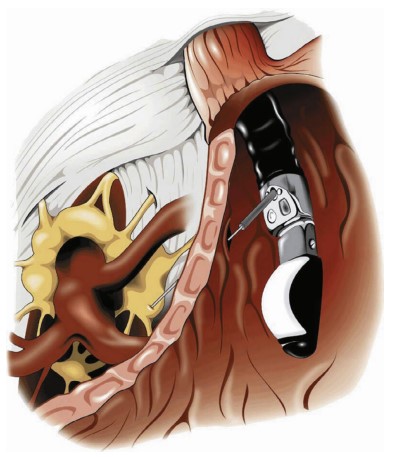
Figure 1: Anatomical illustration showing the precision-guided transgastric approach of a linear echoendoscope deploying a therapeutic needle into the celiac ganglia. © Dr. Ali Taj
Celiac Plexus Interventions: Targeting Pain at Its Source
The celiac plexus block or neurolysis is the most common EUS-guided intervention in current practice, particularly for managing significant pain associated with pancreatic cancer. This procedure involves the injection of ethanol to achieve pain control, offering significant relief. For patients suffering from abdominal pain due to chronic pancreatitis, the results can be more modest, but still provide a crucial improvement in quality of life.
- Mechanism: The procedure uses linear ultrasound guidance to pass a fine-needle through the stomach wall, injecting dehydrated ethanol or high-potency anesthetic-steroid combinations directly around the celiac trunk base.
- Cancer Palliation: It provides rapid relief for patients dealing with abdominal pressure or tumor infiltration from pancreatic cancer.
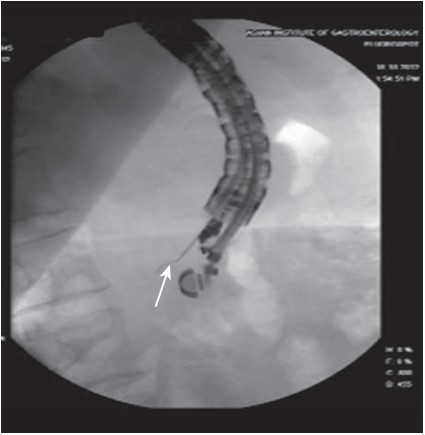
Figure 2: Intraprocedural fluoroscopic confirmation view showing the curvature of the endoscope and the precise line of needle extension (indicated by the white arrow) during a targeted block. © Dr. Ali Taj
Advancing Beyond Traditional Methods: Radiofrequency Ablation and Brachytherapy
Innovative techniques such as radiofrequency ablation and brachytherapy are being explored to extend the capabilities of EUS-guided treatments further. These methods are especially considered for patients unfit for surgery or those needing palliative control of locally advanced cancers. While these advanced techniques show promising preliminary data, they remain under clinical investigation, highlighting the dynamic nature of gastroenterological research.
Beyond Pancreatic Malignancies: Broadening the Horizon
Although many EUS-based techniques primarily target the ablation or control of pancreatic malignancies, they also play a vital role in enhancing the delivery of radiation therapy. This is achieved through the placement of radiopaque markers directly into the tumor, facilitating targeted treatment and potentially improving outcomes for patients with various types of cancers.
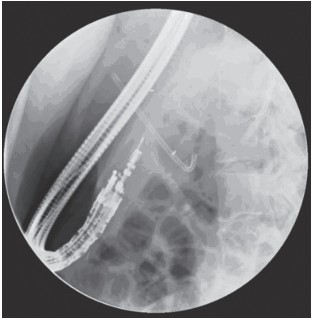
Figure 3: Fluoroscopic verification image illustrating the intraprocedural X-ray orientation used to evaluate structural target alignment. © Dr. Ali Taj
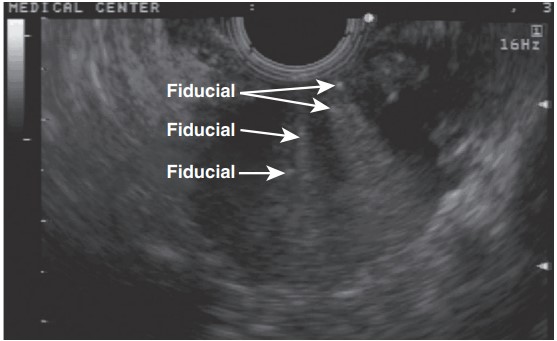
Figure 4: High-resolution linear EUS view demonstrating multiple echogenic fiducial markers implanted directly into target tissue. © Dr. Ali Taj
Conclusion
EUS-guided ablative therapy and celiac plexus interventions represent groundbreaking advancements in the field of gastroenterology. These techniques offer new avenues for pain management and cancer treatment, providing hope and improved quality of life for patients facing pancreatic diseases. As research continues and these procedures evolve, they promise to redefine the standards of care in the management of complex gastrointestinal conditions.
Disclaimer: This content is for informational purposes only and should not be considered medical advice. Consult a healthcare professional for personal medical advice.
Learn More About Our Gastroenterology Services
Contact Us for More Information