
Effective Treatments for Biliary Stones
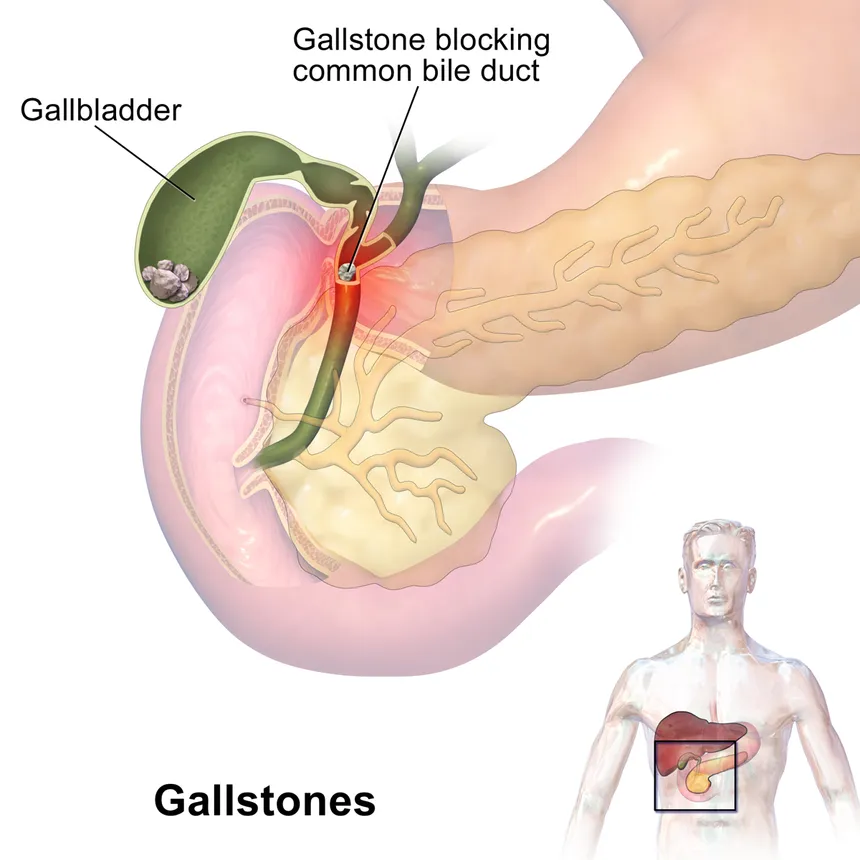
Understanding Biliary Stones
Biliary stones are hard deposits that can form in the gallbladder or bile duct. They can cause a range of symptoms, from mild discomfort to severe pain and complications. Treatment options vary based on the location and size of the stones, as well as the patient’s overall health.
The word “gall” means bile. This means your gallbladder is essentially your “bile bladder”. A dedicated storage pouch for the digestive fluid produced by your liver. When you eat, your bile ducts act as a delivery network, carrying this fluid through your biliary tract to help break down food.
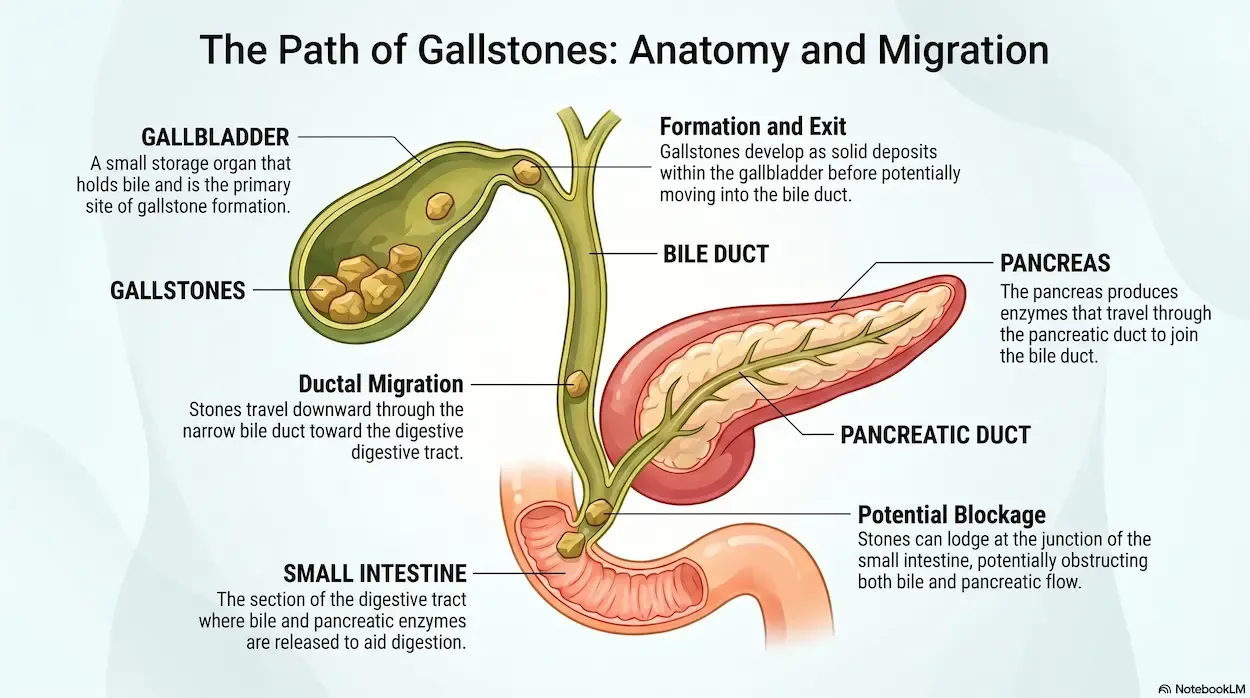
Gallbladder and biliary anatomy. © Dr. M. Ali Taj
Doctors often refer to the presence of gallstones as cholelithiasis. A clinical term where “chole” means bile and “lithiasis” means the formation of stones. These stones develop when sediment within the stored bile accumulates and crystallizes, usually because there is an excess of a primary ingredient like cholesterol.
What are the symptoms of gallstones
Gallstones usually do not cause any trouble or show any signs unless they get stuck in a bile duct and create a blockage.
When a stone blocks the flow of fluid, the most common red flags are sharp pain in your upper belly and sickening feeling in the stomach. This pain can roll in like waves or hit you and stay for hours. If the blockage is severe or left untreated for too long, your body will start firing off major alarm signals, including:
- Sudden sweating
- Fever and chills
- A racing heartbeat
- A swollen belly
- A yellow tint in your eyes and skin (jaundice)
- Unusually dark urine and pale stool
Where is gallstone pain located?
Your gallbladder sits on the upper right side of your belly, right beneath your right ribcage, which is exactly where most people feel the pain. However, your nerves can carry that pain to other parts of your body. This is called referred pain, and it commonly travels to:
- Your right shoulder or right arm
- Your back, right between your shoulder blades
- The exact center of your upper belly or chest
Because the pain can show up in the center of your chest, it can be highly confusing. Many people mistake a gallbladder attack for a bad case of heartburn, acid reflux, or indigestion. Others even fear they are having a heart attack, which is a completely different medical emergency.
Bile Duct Stones Treatment
When stones block the bile ducts, they can cause pain, infection, and other serious complications. Dr. Ali utilizes advanced techniques for bile duct stones treatment such as:
- Endoscopic Retrograde Cholangiopancreatography (ERCP): This procedure combines endoscopy and X-ray imaging to remove stones from the bile duct.
- Biliary Lithotripsy: For cases involving a dilated common bile duct without stones, lithotripsy can be used to break down sludge and debris. Biliary lithotripsy meaning involves using shock waves to break up stones into smaller pieces that can pass naturally.
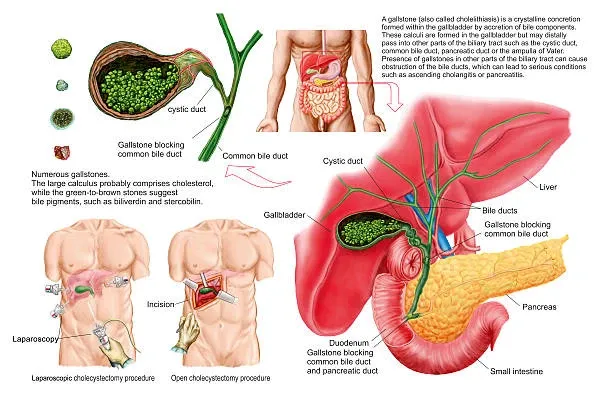
Bile duct anatomy and stone locations. © Getty Images
Bile Stone Removal Surgery and Common Bile Duct Stone Surgery
For larger stones or those that cannot be treated with less invasive methods, bile stone removal surgery or common bile duct stone surgery may be necessary.
Gallbladder Lithiasis Treatment
Gallbladder lithiasis refers to the formation of stones within the gallbladder. Treatment options range from dietary changes and medication to surgical removal of the gallbladder, depending on the severity and recurrence of stone formation.
When to Seek Treatment
If you’re experiencing symptoms such as abdominal pain, jaundice, or fever, it’s important to consult with Dr. Ali Taj. Early intervention can prevent complications and lead to better outcomes.