
Dr. Ali's Expertise in Cytology: Enhancing Gastroenterological Procedures
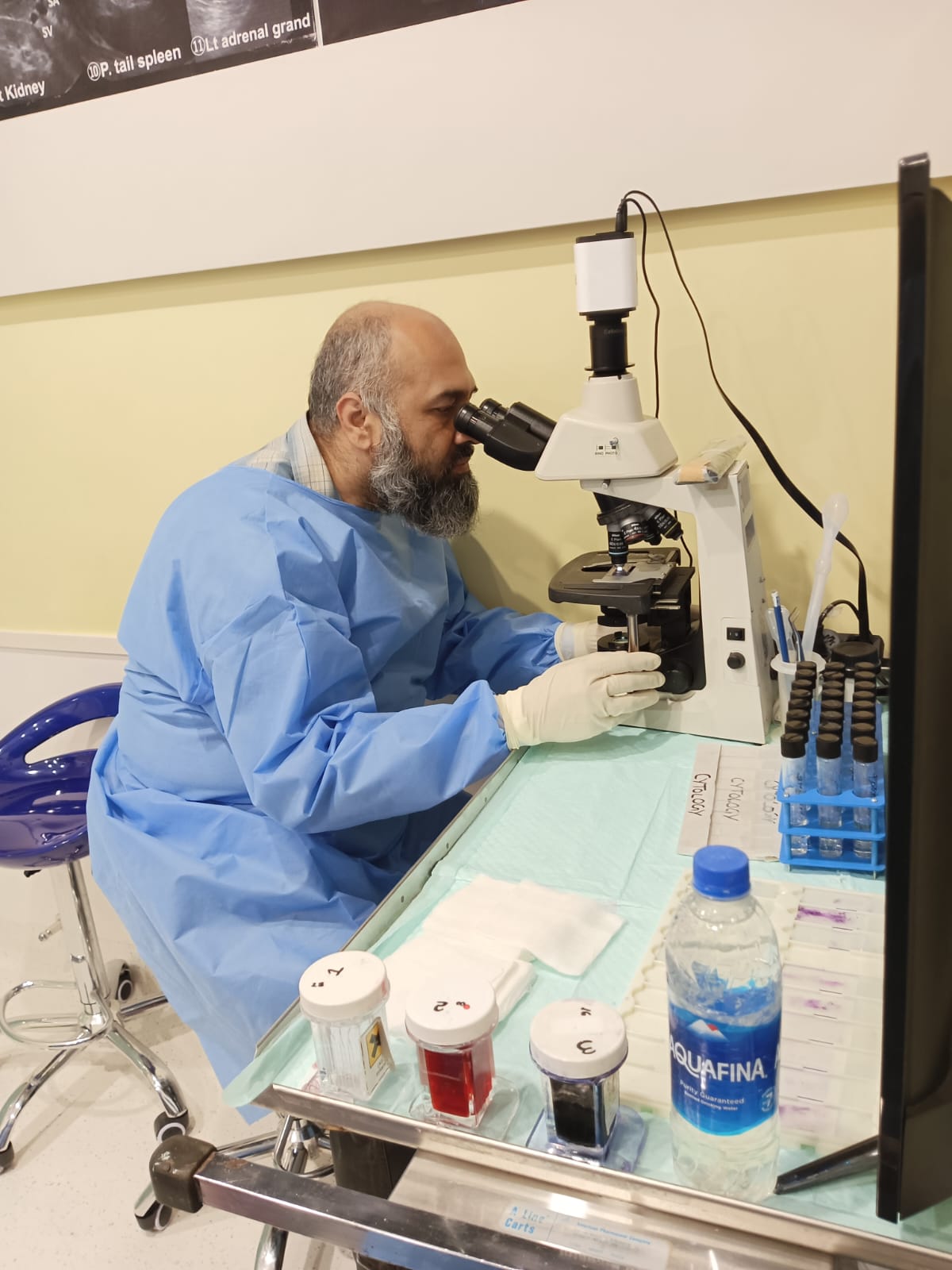
What is Cytology ?
Cytology (also known as cytopathology) is a specialized branch of medicine that involves screening and diagnosing diseases by looking at individual cells under a microscope.
Unlike a traditional surgical biopsy, which evaluates a solid chunk of tissue to see how columns of cells fit together, cytology focuses on the structural features, shape, and health of isolated cells. A pathologist carefully examines a small sample of body fluid or surface cells to detect subtle microscopic variations. These tiny cellular clues can reveal precancerous anomalies, early stage cancers, or active infections caused by bacteria, fungi, parasites, and viruses long before a physical tumor becomes visible to the naked eye.
A laboratory pathologist analyzing a sample under a microscope for cytopathology evaluation. © Getty Images
The Role of Cytology in Gastroenterology
In gastroenterology, cytology is an invaluable tool for evaluating the lining of the digestive tract and its surrounding organs. Because the gastrointestinal (GI) tract is a long, continuous mucous membrane stretching from the mouth to the rectum, it frequently sheds cells naturally, making it an excellent candidate for highly accurate, minimally invasive cellular testing.
Cytology plays a crucial role in diagnosing a wide range of gastrointestinal diseases, providing deep insights that guide treatment strategies:
- Early Cancer Detection: It is primary in identifying early malignancies or dysplasia (precancerous cell changes) in the esophagus, stomach, colon, and pancreas.
- Investigating Pancreatic Cysts and Masses: Using specialized needles, cells can be drawn directly from hard-to-reach tumors or fluid-filled cysts in the pancreas to determine if they are benign, inflammatory, or malignant.
- Evaluating Bile Duct Strictures: When bile ducts narrow abnormally, brushing the inner walls collects cells that clarify whether the blockage is due to harmless scarring or an aggressive biliary tract tumor.
- Diagnosing Refractory Infections: It helps spot opportunistic infections in the gut lining, such as Candida (fungal) or Cytomegalovirus (CMV), especially in patients with weakened immune systems or severe inflammatory bowel disease (IBD).
How Dr. Ali Taj Integrates Cytology into Clinical Practice
1. Endoscopic Brush Cytology
During routine upper GI endoscopies or colonoscopies, if there is a flat, suspicious change in the tissue lining or a stricture in the esophagus, a specialized micro brush is used to gently harvest surface cells. This method is effective for ruling out early stage esophageal and gastric cancers without causing discomfort to the patient.
2. Fine-Needle Aspiration (FNA) via EUS
For deep lesions, pancreatic masses, or enlarged lymph nodes adjacent to the gut, Endoscopic Ultrasound-Guided Fine-Needle Aspiration (EUS-FNA) is utilised. This allows him to pass a microscopic needle safely through the intestinal wall to collect fluid and cells from masses that would otherwise require major exploratory surgery to diagnose.
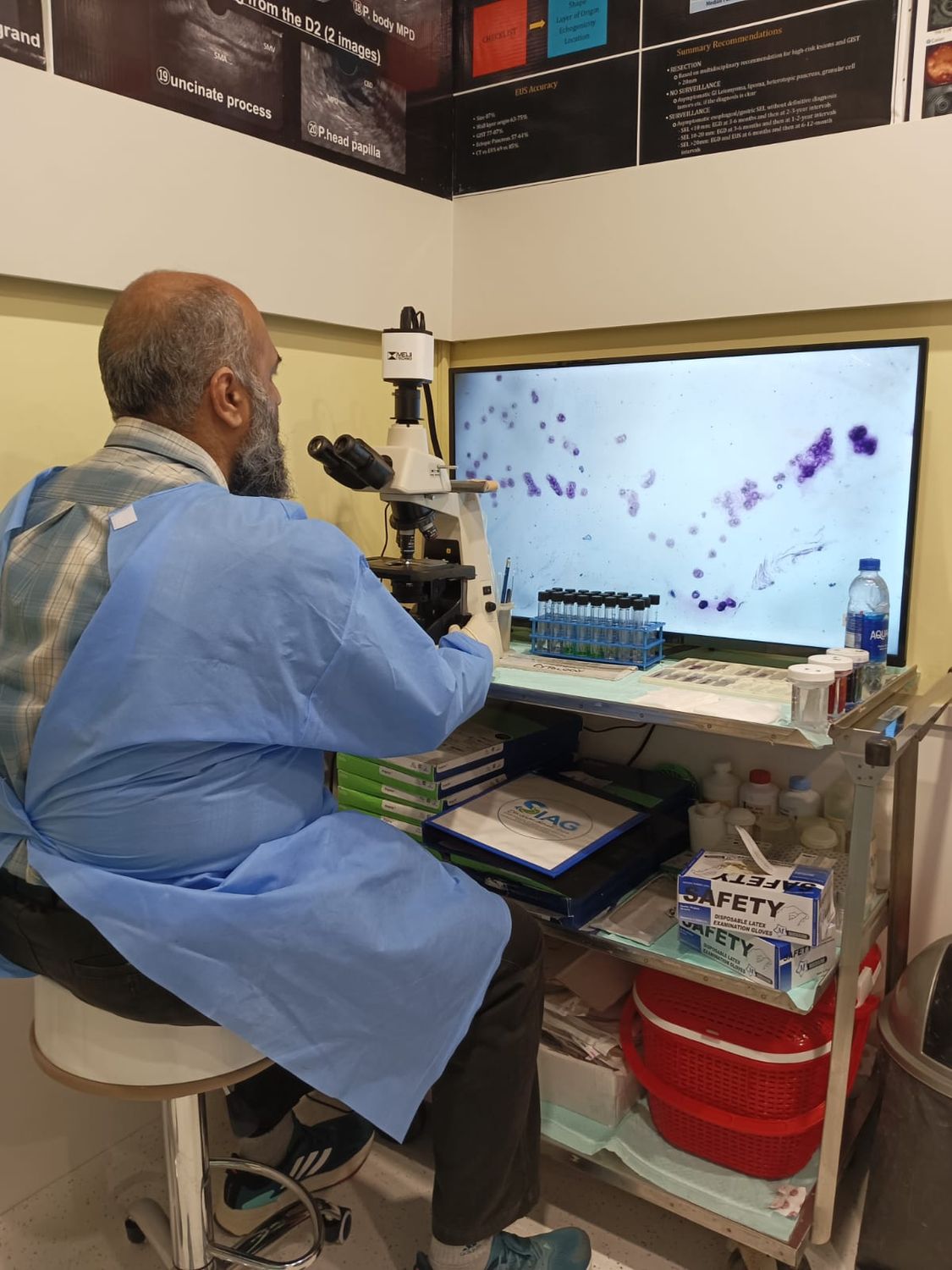
Dr Ali Taj screening for gastrointestinal pathology verification. © Dr. M. Ali Taj
The Role of Cytology in Gastroenterology
Cytology plays a crucial role in gastroenterology, particularly in diagnosing and treating various gastrointestinal diseases. By examining cells from the gastrointestinal tract, early signs of cancer, inflammation, and other abnormalities can be detected.
How Cytology is integrated in Procedures
During endoscopic procedures like colonoscopies or ERCPs cytological sampling is performed often. This involves collecting cells from the lining of the gastrointestinal tract for detailed analysis.
Endoscopic Ultrasound-Guided Fine Needle Aspiration (EUS-FNA)
This technique allows for the precise collection of tissue samples from areas like the pancreas, liver, or lymph nodes.
Immediate On-Site Evaluation (IOSE)
This technique allows for the immediate assessment of the quality of the collected samples, ensuring that sufficient and appropriate material is obtained for accurate diagnosis.
Advantages of Cytological Integration
- Early Detection: The integration of cytology in gastroenterological procedures enables the early detection of malignancies and other conditions.
- Precision: Cytological techniques, particularly in EUS-FNA, allow for precise targeting of lesions, reducing the need for more invasive procedures.
- Personalized Treatment: Detailed cellular analysis aids in developing more effective, personalized treatment plans for patients.
Medical Disclaimer: This information is for educational purposes only. Always consult with Dr. Ali Taj or qualified healthcare provider for proper diagnosis and treatment of Crohn’s disease and other digestive disorders.